
The Real AI Energy Trade: Optionality Over Prediction in Infrastructure Investment
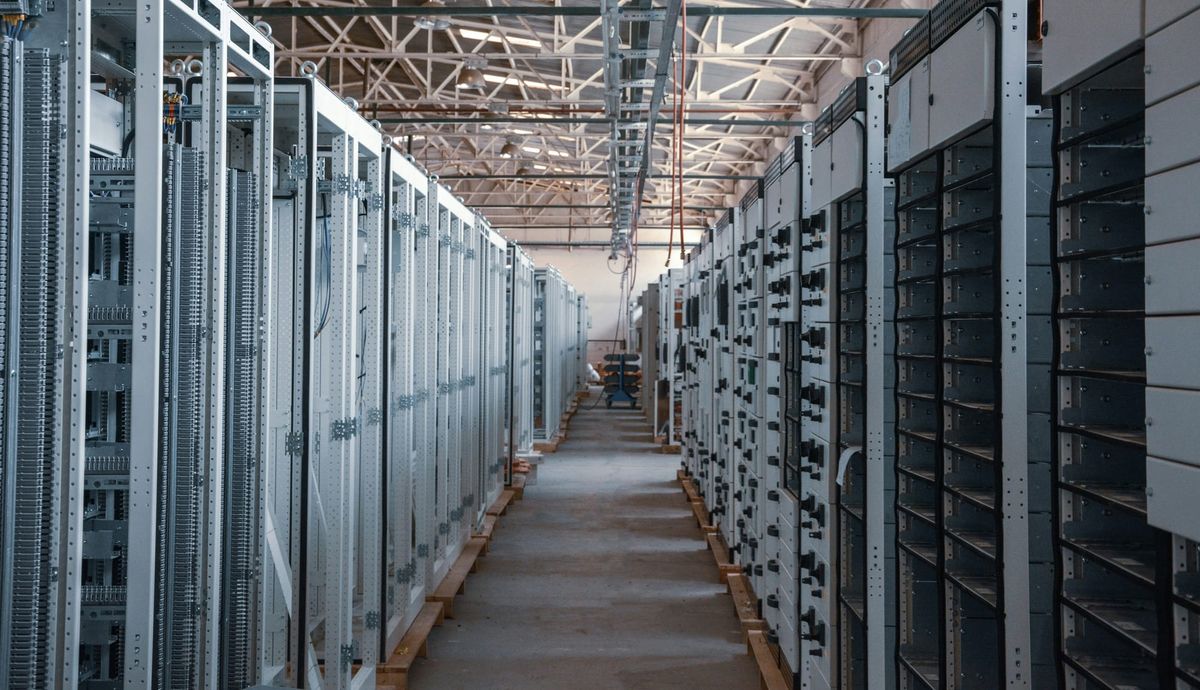
The consensus on AI energy is already priced in. This issue makes the case that the uncertainty itself is the signal — and that patient private capital is better positioned for it than almost anyone realises.
00 · EXECUTIVE SUMMARY
Five Things This Briefing Will Tell You
The AI energy story everyone is telling is incomplete. The consensus — that AI needs a lot of electricity, so own data centers (capital likes assets) — is already priced in. What is not priced in is the extraordinary uncertainty about how much electricity, where, and when. That uncertainty is not a problem to solve before investing. It is the investment signal. This briefing sets out the constraint, the three things the standard thesis gets wrong, and where patient private capital has genuine advantage. Five questions frame what follows.
1 — Why is the real constraint delivery, not generation?
2 — What are the three things the consensus thesis gets wrong?
3 — Where does private capital have genuine advantage that the public market has not yet priced?
4 — What five signals will tell you whether the constraint is tightening or easing over the next 12 months?
5 — What to do with the Signals – how to filter the noise
01 · CONSTRAINT DIAGNOSIS
The Binding Constraint Is Delivery, Not Generation
Everyone knows AI needs a lot of electricity. That part is priced in. What isn’t priced in — and what this briefing is actually about — is the remarkable uncertainty around how much, when, and where. Get that uncertainty right and the investment picture looks very different from the one most people are currently working from.
What We Know
The International Energy Agency’s April 2025 report placed global data center electricity consumption at roughly 415 TWh in 2024 — approximately 1.5% of total global electricity. Their base case projects 945 TWh by 2030, equivalent to Japan’s entire current consumption. The United States accounts for the largest share: 180 TWh today, rising to 425 TWh by 2030. AI’s share of that data center load currently sits at 5–15%, projected to reach 35–50% by 2030.
These numbers are backed by real corporate commitments. The five largest hyperscalers — Microsoft, Alphabet, Amazon, Meta, and Oracle — have committed approximately $1 trillion in combined capital expenditure for 2025 and 2026 alone. Microsoft's Satya Nadella stated publicly that his biggest problem is not chip supply but the fact that he does not have 'warm shells to plug into' — power-ready facilities to house chips already purchased. Amazon's Andy Jassy called power AWS's 'single biggest constraint.'
But the Range Is What Matters
Here is where the consensus story gets complicated. Credible forecasts for US data center power demand by 2030 range from around 65 GW (Grid Strategies) to 90 GW on utility-compiled estimates, while RAND and Epoch AI project up to 327 GW for global AI-specific compute demand — a figure that is not directly comparable but illustrates the scale of uncertainty. Morgan Stanley projects a 44 GW gross power shortfall for US data centers by 2028. Goldman Sachs, McKinsey, BloombergNEF, and the Department of Energy each publish meaningfully different figures. No one agrees.
This is not a knowledge gap that will be closed by better modelling. It reflects genuine, structural uncertainty about AI adoption curves, efficiency trajectories, and whether current spending commitments will be sustained. As McKinsey put it: 'The stakes are high. Overinvesting in data center infrastructure risks stranding assets, while underinvesting means falling behind.'
THE CORE CONSTRAINT The immediate bottleneck is not the total electricity that can ultimately be produced. It is the speed at which local grids can connect large new demand. Grid infrastructure moves on regulatory and political timelines, not technology cycles — and that mismatch is already shaping where AI capability can physically locate. |
The Physical Bottleneck
The median US interconnection queue now takes five years from application to commercial operation. In PJM — the grid operator covering Northern Virginia, the data center capital of the world — the wait exceeds eight years. Roughly 2,600 GW of generation and storage projects sit in US interconnection queues, more than double total installed US capacity. Only 19% of projects entering queues between 2000 and 2018 ever reached commercial operation.
In Europe, the picture is no better. The UK’s demand connection queue tripled from 41 GW to 125 GW in seven months during 2025. Amsterdam has banned new data centers until at least 2030. Ireland, where data centers already consume around 22% of national metered electricity, lifted a moratorium only after imposing conditions that require operators to install their own generation.
The physical bottleneck extends beyond the grid itself. Power transformer lead times now stretch to 2.5–4 years, up from weeks before the pandemic. Wood Mackenzie estimates a 30% supply shortfall for large power transformers across the US fleet. High-voltage circuit breakers take three years. Copper prices hit record highs above $13,000 per tonne in early 2026, with S&P Global projecting an annual supply deficit of approximately 10 million metric tonnes by 2040 as demand outpaces mining capacity.
Data halls are already being built and sitting idle because the electrical equipment to connect them does not exist. And the political dimension is now activating: across the US, mayors are moving from enthusiastic approval to active resistance, citing strained grids, water consumption, and gas turbine pollution — adding a local planning constraint to the existing queue and equipment bottlenecks. The infrastructure problem is not just physical. It is becoming political.
02 · WHY CONSENSUS GETS IT WRONG
Three Complications the Standard Thesis Misses
The Training–Inference Split
The standard investment thesis treats AI energy demand as a monotonically increasing curve. Build the power, and they will come. This misses a structural shift that is already underway.
Training a frontier AI model is extraordinarily energy-intensive — a single run can consume the annual electricity of a small town. But training is a cost center, not a revenue generator. Inference — running the trained model to answer questions, generate content, or power autonomous agents — is where the money is. Inference already accounts for 80–90% of all deployed AI compute.
The Alvarez & Marsal report on AI demand, published in February 2025 based on interviews with hyperscaler capacity planners, confirmed that 80% of current new data center builds are driven by training demand — but this ratio will reverse to 20% training and 80% inference by 2030–32. As one hyperscaler planner put it: ‘At some point, you are not going to need that entire hundred megawatts forever... you’ll only need maybe 60 or 70 out of the hundred.’
This has profound implications for which facilities retain value. Training is latency-insensitive — you can do it in a field in West Texas. Inference — running the trained model to answer real users’ questions in real time, charged per token of text processed — needs proximity to users. Rural mega-campuses built specifically for the training boom may become stranded assets as inference becomes the dominant workload. The facilities with durable value are those in established, well-connected markets that can transition between workload types.
WHAT IS A TOKEN? A token is roughly three-quarters of a word — the basic unit AI companies use to measure and charge for usage. A short question and answer uses a few hundred tokens. A complex document analysis uses tens of thousands. Every token is billed. When the price per token falls 280-fold, you do not use the same number of tokens — you use vastly more, because suddenly it is economical to run AI across entire workflows rather than single questions. That is the Jevons Paradox in action, and it is why total spending keeps rising even as unit costs collapse. |
The counterargument is worth stating directly: inference demand may simply absorb training capacity rather than displace it, with rural campuses repurposing to serve inference at lower utilisation rather than being mothballed. On this view, the workload ratio shifts without the location economics changing materially. Signal 2 in the next section is designed precisely to test which version is playing out — watch the public cloud metrics.
Efficiency Is Moving at Terrifying Speed
In August 2025, Google published data showing a 33-fold reduction in energy per median Gemini text prompt over just twelve months — driven primarily by software optimisations including Mixture-of-Experts architectures, model distillation, and intelligent hardware power management. NVIDIA claims its GB200 platform delivers 30x faster inference than the H100 at dramatically lower energy cost. Epoch AI's data shows GPU energy efficiency has improved at 34% per year since 2008, doubling every 2.4 years.
Then came DeepSeek. In January 2025, the Chinese lab released a reasoning model that matched OpenAI’s leading benchmark performance using 2,048 older-generation H800 GPUs and a reported final-run compute cost of $5.6 million — a figure that covers only the final training run, not prior research, ablation experiments, or hardware acquisition, but striking nonetheless against the $100 million-plus spent on GPT-4. NVIDIA lost approximately $589 billion in market capitalisation in a single day — the largest single-day market cap loss in US history. Analysts noted that DeepSeek ‘calls into question the significant electric demand projections for the US.’
The market quickly invoked the Jevons Paradox — efficiency makes AI cheaper, so total consumption rises anyway. This is not just likely; fifty years of computing history suggest it is almost certain. Humanity’s appetite for compute has proved consistently insatiable: every efficiency gain has been absorbed by new applications, new users, and new use cases that were previously uneconomical. The more defensible position is not that efficiency might save us from the energy constraint — it is that efficiency will keep raising the ceiling before we hit it again. The constraint doesn’t disappear. It compounds.
There is a harder question underneath the efficiency debate that rarely gets asked: how long can this rate of improvement continue? GPU efficiency has doubled roughly every 2.4 years for over a decade, but that curve is driven by shrinking transistor geometries that are approaching physical limits. Taiwan Semiconductor Manufacturing Company’s 3nm process (TSMC)— on which Amazon’s Trainium3 chip is currently built, and which now runs the majority of inference traffic on AWS Bedrock — already works with features measured in a small number of silicon atoms. The next node shrinks further, and below a certain threshold, electrons begin to leak through barriers they should not be able to cross — a quantum physics phenomenon that causes transistors to malfunction and that engineers cannot simply design away. Software optimisation and architectural innovation are extending the runway, but the physics ceiling is real. Crucially, it is not factored into forecasts that assume 34% annual efficiency gains compounding indefinitely. If the hardware curve flattens before AI adoption does, the energy constraint snaps back sharply — and it does so at exactly the moment when the single factory capable of producing leading-edge chips at scale sits on a 36-kilometre-wide island in the Taiwan Strait. The geography of constraint does not stop at Western grid queues.
Agentic AI Points in the Opposite Direction
Reasoning and agentic AI models are the wild card. A December 2025 study led by Hugging Face and Salesforce researchers found that reasoning models consume on average 30x more energy per query than standard models, with extreme cases reaching up to 700x. The emerging wave of autonomous AI agents — which chain multiple inference calls, browse the web, execute code, and iterate — could push energy consumption per task up by orders of magnitude.
If agentic AI becomes the dominant interaction paradigm by 2028–2030, it could overwhelm efficiency gains entirely. Or agentic architectures could be optimised aggressively, as happened with every previous AI workload. The honest answer is: we do not know. And that uncertainty is the signal.
THE CORE TENSION Efficiency is improving at historic rates, while new use cases threaten to consume every efficiency gain and more. Altman himself estimated AI efficiency improves roughly 40x per year, calling it 'a very scary exponent from an infrastructure buildout standpoint.' Google's Urs Hölzle put the forecasting problem plainly: 'A lot of times when these forecasts are done, they come up with alarming numbers. They assume that technology remains constant and that demand is increasing exponentially. The world is not static.' |
03 · INVESTMENT IMPLICATIONS
Optionality Over Prediction
The historical analogies point in the same direction. Between 1996 and 2001, telecoms companies invested over $500 billion laying 80 million miles of fibre optic cable. The underlying thesis turned out to be roughly a 4x overestimate of demand timing. By 2002, only 2.7% of installed fibre was lit. WorldCom, Global Crossing, and dozens of others went bankrupt. But the infrastructure itself was eventually needed. Level 3 Communications acquired an entire internet backbone for $60 million in 2003 and was sold for $34 billion in 2017. The infrastructure created YouTube, Netflix, and cloud computing — just not on the timeline the original investors expected.
Some serious investors go further and argue that the bubble itself is not a failure mode — it is the mechanism. The economist and venture capitalist Bill Janeway, in his study of how technology cycles actually work, argues that speculative capital is the only force capable of funding the infrastructure society eventually needs, precisely because no rational actor would commit to it on a project-by-project basis. The fibre optic build-out was economically irrational for most participants and structurally necessary for what came after. The argument applies to AI infrastructure today: even if half the data centers being built turn out to be excess capacity, the grid upgrades, transformer manufacturing, and power access infrastructure created in the process will compound in value for decades. The investors most at risk are those who own the speculative capacity. The investors most likely to benefit are those who own the enabling layer — whether the bubble inflates, deflates, or surprises everyone.
The shale revolution tells a complementary story. The companies that drilled the wells mostly destroyed capital. The companies that owned the pipelines and processing plants earned the best risk-adjusted returns over the full cycle. Midstream infrastructure had fee-based revenue models insulated from commodity price swings.
APPLIED TO AI ENERGY Own the power access, the grid connections, the flexible facilities, and the cooling systems — not the GPUs. The specific investment principle is to favour assets that retain value across the widest range of AI demand outcomes. |
Grid Rights and Transmission Assets
A word of caution the fibre analogy demands: not all infrastructure survives a cycle turn. The companies that owned the cables mostly went bust — it was the patient buyers of distressed assets who captured the value. The same logic applies here. Grid connections and flexible colocation in established markets have multiple use cases regardless of AI demand. Single-purpose cooling infrastructure built for one workload type in one location does not. The selection matters as much as the category.
Grid interconnection rights and transmission assets represent the scarcest resource in the entire AI infrastructure stack. PJM approved an $11.8 billion transmission expansion plan in early 2026. Queue positions are increasingly tradeable. Industrial sites with existing grid connections — particularly retired power plant sites — command 2–4x the land prices of comparable unconnected parcels. This is the highest-conviction opportunity because it serves all electrification demand, not just AI.
Multi-Tenant Colocation in Tier 1 Markets
Wholesale colocation is the data center equivalent of the midstream pipeline play. Rates — charged per unit of power capacity per month — have risen from around $120 in late 2021 to nearly $196 today, according to CBRE’s H2 2025 North America Data Center Trends report. Vacancy in the tightest markets — Northern Virginia, Central Washington — has fallen below 1%; the primary market average sits at 1.6–1.9%. Industry analysts have noted that colocation now ‘behaves less like a real estate product and more like a power access product.’ Multi-tenant facilities near population centers can transition between training, inference, enterprise cloud, and content delivery workloads. Remote training-specific facilities cannot.
Battery Storage
Battery storage has the best downside protection of any AI-adjacent investment. Hyperscalers present an estimated 20 GW opportunity for battery energy storage through 2035. Behind-the-meter batteries allow data centers to connect to the grid years earlier than traditional utility upgrades by shaving peak demand. Critically, if AI demand disappoints, batteries serve grid balancing, frequency regulation, and renewable integration regardless. US utility-scale battery capacity grew 66% in 2024. This is fully repurposable infrastructure.
A Note on Nuclear
Small modular reactors remain a 2030s story for Western markets. Russia’s Akademik Lomonosov has operated commercially since 2020, and China’s HTR-PM entered commercial operation in 2023 — but no Western SMR has yet produced commercial electricity. The most credible near-term Western timeline is Rolls-Royce SMR at Wylfa in North Wales, selected by the UK government in November 2025, with first power targeted for the mid-2030s. SMR equity is a high-conviction, long-duration bet on the 2030s energy landscape. Sizing should reflect binary outcome risk.
04 · SIGNAL WATCH
Five Indicators to Track Over the Next 12 Months
These are not investment triggers. They are diagnostic signals that tell you whether the constraint thesis is intensifying or easing — and whether the assets you hold are appreciating or approaching a rerating.
Signal 1 — Hyperscaler Capex Revisions (Q3/Q4 2026 Earnings)
The $1 trillion commitment is real but not irrevocable. If Meta or Microsoft signal capex moderation, it indicates the demand curve is bending. If Oracle and Amazon accelerate further, the constraint thesis intensifies. Watch the spread between guided capex and actual spend — in the telecom boom, the first signal of the coming crash was capex coming in below guidance. This is the single most important number to track.
The most recent data point is instructive. Microsoft’s FY2026 Q2 earnings (reported January 28, 2026) showed capital expenditure of $37.5 billion — roughly $3.2 billion above Wall Street consensus. Azure AI revenue grew 39% year-on-year. The stock fell 7–12% after hours not because spending was too low, but because investors were unnerved by how high it was. Amy Hood guided that Q3 capex would decrease sequentially due to “the normal variability from cloud infrastructure buildouts and the timing of delivery of finance leases” — language the market read as a signal of moderation. Watch whether that sequential decline materialises in Q3 and Q4 2026 reporting, and whether the language shifts from supply-constrained to demand-constrained. Those are different problems with very different implications for the infrastructure thesis.
Signal 2 — Training-to-Inference Ratio in Public Cloud Metrics
AWS, Azure, and Google Cloud are beginning to disclose AI-specific revenue and usage metrics. When inference revenue decisively exceeds training-related revenue, the workload shift is confirmed, and the location and design requirements for data centers shift materially. Deloitte projects inference at 66% of AI compute by end of 2026. Watch whether this materialises — it tells you whether rural mega-campuses are entering obsolescence.
Signal 3 — Transformer and Switchgear Lead Times
Wood Mackenzie projects the transformer shortage narrowing from 700+ units to 140 units by 2030 as manufacturing capacity comes online. $1.8 billion in North American manufacturing expansions have been announced. If lead times compress from 3+ years to 18 months by mid-2027, the grid constraint eases and behind-the-meter premiums decline. If they do not, on-site power assets become more valuable and power-access premiums widen further.
The most concrete solution underway is domestic manufacturing reshoring. Hitachi Energy announced in September 2025 a $457 million investment to expand its large power transformer factory in South Boston, Virginia — part of a broader commitment of more than $1 billion across its US facilities — explicitly citing AI data center demand alongside grid modernisation as the demand anchor. ABB and Eaton have made comparable announcements. The practical test is simple: transformer lead times currently run 2.5–4 years. If by mid-2027 that range has compressed to 18 months or below, the manufacturing response is working and the physical bottleneck is easing. If not, the constraint remains structural and assets with existing grid connections compound in value.
Signal 4 — The Next Efficiency Shock
DeepSeek demonstrated that training efficiency can leap forward unpredictably. An equivalent breakthrough in inference efficiency — say, a 10x improvement from custom-built chips or novel architectures — would fundamentally reshape the demand curve. Altman's claim of 40x efficiency improvement per year is the number to test against reality. If realised, it means infrastructure deployed today must justify itself on a demand base that may be served by one-fortieth the hardware within three years. This argues powerfully for flexible assets over rigid ones.
The concrete thing to watch here is custom silicon. Google’s Trillium (TPU v6e) — now generally available — delivers approximately 3x inference throughput and 67% better energy efficiency over its predecessor, yielding roughly 5x inference performance per watt. Google has since announced TPU v7 (Ironwood), its first inference-specific chip, with 2x performance per watt over Trillium. Amazon’s Trainium 2, generally available since December 2024, claims 3x better energy efficiency over first-generation Trainium. Microsoft deployed its Maia 200 inference accelerator in January 2026, built on TSMC 3nm and already running production workloads in its data centers. Meta has hundreds of thousands of its MTIA inference chips deployed across its consumer platforms. None of this is speculative — these products exist and are at scale.
The question is how fast the efficiency curve compounds. If a second DeepSeek-scale event occurs — an open-source model matching frontier performance at a fraction of the inference cost — the demand assumptions underpinning the entire AI energy thesis shift overnight. In late March 2026, ARM — the 35-year-old chip designer that built its business licensing designs to Nvidia and Qualcomm — announced it will manufacture its own chips directly, targeting $15 billion in annual revenue within five years. When a company that has never made a chip decides to become a chipmaker, it signals how fast the competitive landscape is moving — and how much is still unresolved.
The asset classes most exposed to this risk are large, single-purpose rural training campuses. The most insulated are flexible, multi-tenant facilities in established markets that can repurpose capacity regardless of which model architecture wins.
Signal 5 — Behind-the-Meter Private Grid Emergence
One of the most significant structural shifts now underway — and still underreported in mainstream investment analysis — is the movement of major data center operators away from public grid reliance entirely. Rather than joining interconnection queues measured in years, a growing number of hyperscale projects are deploying behind-the-meter generation on-site: dedicated gas turbines, microgrids, and fuel cells providing power directly to the facility without passing through the public grid at all.
The scale is already substantial. Oracle’s Stargate project in Texas is being powered by 2.3 GW of dedicated on-site gas generation through VoltaGrid — bypassing the grid entirely. CloudBurst has signed contracts for 1.2 GW of behind-the-meter capacity; Fermi America for 2 GW. McKinsey estimates that 25–33% of all incremental data center power demand through 2030 will be met this way. This is not a niche workaround. It is becoming the primary deployment model for the largest projects.
The scale of this shift was confirmed March 23rd, when NVIDIA and Emerald AI announced a collaboration with AES, Constellation, Invenergy, NextEra Energy and Vistra to develop what they are calling “Flexible AI factories”; facilities designed from the outset to operate as grid assets rather than pure loads. The architecture combines on-site generation and battery storage with software that scales compute up or down in response to grid conditions. NVIDIA estimates the approach could unlock up to 100 GW of latent US grid capacity. Jensen Huang framed the underlying logic plainly: the constraint has forced a redesign of the entire stack “energy, compute, networking and cooling as one architecture”.
Watch for two things over the next twelve months. First, the share of new data center capacity announcements that specify on-site generation rather than grid connection — if this crosses 40% of announced GW, the public grid constraint has effectively been institutionalised as a given, not a problem to be solved. Second, regulatory and permitting responses to on-site gas deployment: the xAI situation in Memphis — running turbines without permits in residential areas — is the leading edge of a political backlash that could impose new conditions or costs on on-site generation. If that happens, the economics shift back toward grid connection and battery buffering. If it does not, on-site gas generation cements itself as the dominant near-term solution and the premium on fast-deploying on-site assets widens further.
Horizon Signal — Water Consumption
This is a 3–5 year signal, not a 12-month one. Data centers currently consume approximately 1–5 litres of water per kWh for cooling. A large AI campus can use as much water as a small city. As AI infrastructure scales and summer temperatures rise, water access will emerge as a secondary binding constraint — particularly in the American Southwest, Southern Europe, and parts of the Middle East. Watch for permitting conditions on new data center approvals that reference water allocation. When water starts appearing in infrastructure planning documents, the constraint is already operational.
04b · THE GEOGRAPHY OF CONSTRAINT
Beyond the Western Frame
China’s Delivery Advantage
The five signals above measure friction in Western institutional systems. But there is a dimension they do not capture. China has spent a decade building redeployable AI-capable infrastructure under conditions Western planning systems cannot replicate: provincial governments fund utility hookups and subsidise electricity, state coordination ensures data centres are sited near hydropower and cool climates, and the same infrastructure can be repurposed for AI training and inference at a fraction of the Western timeline.
This is not primarily an energy story. It is a delivery story — the same argument this briefing has made about the West, but with the bottleneck already largely solved. The implication is not that China wins and the West loses. Chip export restrictions create their own binding constraints on Chinese AI capability. But AI infrastructure geography is diverging in ways that will harden over the next decade, creating asymmetric regional exposure that investors in Western grid assets are implicitly taking on whether they intend to or not.
Taiwan and the Chip Chokepoint
The second geographic dimension is less discussed but more structurally acute. Every efficiency gain described in this briefing — every chip generation that halves energy per inference, every new architecture that extends the efficiency runway — depends on a single point of manufacturing concentration.
TSMC produces the overwhelming majority of leading-edge logic chips globally. Amazon’s Trainium3, NVIDIA’s H100 and B200, Google’s TPUs: all are manufactured at TSMC’s facilities on Taiwan. The island accounts for around 90% of global advanced chip production below 7nm. There is no near-term alternative. TSMC’s Arizona factories are ramping, but produce a fraction of Taiwan’s output and at higher cost. Intel’s foundry ambitions have faced repeated setbacks. Samsung competes at the leading edge but with lower yields. ASML — the Dutch company that holds a global monopoly on the extreme ultraviolet lithography machines used to etch circuits onto chips — is itself approaching the limits of what physics permits. Its current machines cost $350 million each and etch features just 8 nanometres wide, supporting chip nodes already pushing toward 2 nanometres and below — territory where even a few atoms of misalignment can render a chip non-functional. The next generation of ASML machines capable of going further, known as Hyper-NA, is not expected until 2030 at the earliest. The industry is already designing chips that the tools to build them do not yet exist.
This matters for the AI energy thesis in a specific way. If the efficiency curve is the primary variable determining how much power AI infrastructure will ultimately require, and if that curve depends on continued advances in chip manufacturing, then the geopolitical risk sitting over Taiwan is also a risk to the entire AI energy forecast. A disruption to TSMC’s output — through conflict, blockade, or even a severe earthquake would freeze the efficiency improvement trajectory at whatever point it had reached. That is not a short-term trading risk. It is a structural risk that belongs in any serious long-horizon analysis of where AI infrastructure is actually going. Musk announced late March 2026 of his plans for Terafab – a chip manufacturing project to produce between 100 and 200 bn AI Chips annually. While he allocated 20bn to this project – it is estimated to cost over 5 trillion if realized. Musk sees the constraint – and needs someone to fund it.
05 · WHAT TO DO WITH THE SIGNALS
On Filtering the Noise
You are already receiving a lot of intelligence about AI and the macroeconomics. Your bank sends something daily. Your advisors have a view. Your inbox has three versions of the same thesis dressed in different fonts.
Most of it is noise.
Not because the people writing it are wrong, but because they are writing for everyone — and intelligence written for everyone is useful to no one in particular.
This briefing is written for a specific kind of reader. Someone who has enough capital to move thoughtfully, enough experience to know that the loudest narrative is rarely the most useful one, and enough intellectual honesty to sit with uncertainty rather than reaching for false clarity.
If that’s you, here is what I’d suggest you actually do with what you’ve just read.
Let It Reframe What You’re Already Looking At
You probably don’t need new investments right now. You need a better lens on what you already own.
The constraint this briefing describes — delivery, not generation — is already affecting assets you hold, whether or not you’re framing them that way. Infrastructure funds. Energy positions. Private equity in industrial real estate. Data centre REITs. Any of these may sit closer to the constraint than you realise, or further from it than your advisor assumes.
The most useful thing you can do this week is take one position you already hold and ask a single question: does this asset sit upstream or downstream of the grid bottleneck? That question alone will tell you more than six months of market commentary.
Treat the Signals as a Filter, Not a Forecast
The five signals in this briefing are not predictions. They are diagnostics. They tell you which direction the constraint is moving — tightening or easing — and they give you something concrete to look for in the noise that reaches you every day.
When Microsoft reports Q3 earnings, you’ll know what number to watch and why it matters.
When a transformer manufacturer announces a capacity expansion, you’ll know whether it’s significant or marginal. When an advisor mentions nuclear as an AI energy play, you’ll know whether they’re talking about this decade or the next one.
That’s the point. Not to give you a new thesis to act on. To give you a frame that makes everything else easier to read.
Decide What You Want to Stand For
Private capital at meaningful scale has something institutional money rarely possesses: genuine discretion over what it stands for. The same structural analysis that identifies grid rights and battery storage as investment opportunities also identifies where the world has a problem that needs solving — and where patient, conviction-driven capital can do something that quarterly-cycle money structurally cannot. The most durable impact investments are also economically sound. That constraint is a feature, not a limitation.
05b · WHAT’S COMING IN THE NEXT ISSUE
The Arc
This briefing doesn’t stop at AI energy. Each issue is designed to build on the last — not as a series of separate themes, but as a cumulative map of the structural constraints reshaping where capital needs to go.
Issue 2 goes one layer deeper into the AI story: the physical limits of the chips that make computation possible. Silicon is approaching boundaries that no amount of investment can engineer away. Combine this with the physical AI and Robotic’s demands. What comes next — and who controls it — may matter more to the AI investment thesis than anything happening in the energy grid right now. Quantum vs Classical compute.
Issue 3 follows the water. Every data centre that gets built, every chip that gets manufactured, every cooling system that runs around the clock draws on a resource the market has not yet properly priced. Water is the constraint hiding in plain sight behind the AI build-out — and it connects to food, agriculture, and industrial geography in ways that will reshape regional investment logic over the next decade.
Issue 4 takes a deliberate turn. In a world of infinite digital abundance, the scarce resource becomes something no algorithm can replicate: genuine human presence. Why live events, sports franchises, and physical venues are seeing structural demand that defies every efficiency argument — and what that means for patient capital.
The arc is intentional. Each issue adds a layer.
By Issue 4 you will have a more complete picture of where the real constraints are forming — and where the most interesting capital is quietly moving.
Underneath the capital allocation logic is something simpler.
We are living through one of the most genuinely extraordinary periods in human history. The constraints are real. The uncertainty is real. And so is the possibility.
Every structural shift this publication tracks is, at its core, a problem the world is in the process of solving — with ingenuity, with capital, and with the same restless human curiosity that has navigated every previous transformation. That is not a small thing. It is worth paying attention to.
The first Founding Circle lunch takes place on 12 May in London — a small gathering of the people shaping what this publication becomes. The second, an early summer evening, follows on 16 June. Issues publish on the first of each month. The next is 1 May. The world is spending an extraordinary amount of money trying to solve real problems. Most of that capital will be misallocated, as it always is in transformative cycles. The investors who understood the structure of the constraint — not just the excitement of the theme — will be the ones still standing when the cycle turns.
APPENDIX
Numbers That Should Stop a Room
Use at will to start the debate.
The Fact | Source |
OpenAI’s annualised revenue went from $1.6 billion (2023) to $25 billion (February 2026) — an 18x increase in 26 months. Its first billion-dollar month arrived in July 2025. | The Information; Reuters, March 2026 |
Anthropic’s annualised revenue reached $14 billion by February 2026, growing approximately 10x per year for three consecutive years. Claude Code — a single product launched in May 2025 — reached $1 billion in annualised revenue within six months. It is now at $2.5 billion. | Anthropic Series G press release, February 2026 |
ChatGPT’s share of AI chatbot app users fell from 69% to 45% in twelve months. Over the same period, the share of businesses paying for Anthropic went from 1 in 25 to 1 in 4. | Apptopia via Fortune, Feb 2026; Ramp AI Index, March 2026 |
DeepSeek wiped $589 billion from NVIDIA in a single trading session — the largest single-day market cap loss in stock market history. Its final training run cost a reported $5.6 million. NVIDIA’s quarterly data center revenue is now $51 billion — more than three times what the entire segment earned annually just three years ago. | Bloomberg, Jan 27, 2025; NVIDIA SEC filings |
The cost of querying an AI model at GPT-3.5 performance fell 280-fold between late 2022 and late 2024. Enterprise spending on generative AI tripled over the same period. | Stanford HAI AI Index 2025 |
By 2030, US data centers will consume more electricity than all energy-intensive manufacturing combined — aluminium, steel, cement, and chemicals. Data center construction spending in the US has doubled every year for four consecutive years. | IEA Energy and AI Report, April 2025; US Census Bureau, February 2026 |
THE CONSTRAINT SIGNAL · Issue 1 · April 2026
With thanks to the early readers who gave their time, honest reactions and expertise — The thinking is better for it. This publication is produced for sophisticated private investors and family offices. Nothing herein constitutes investment advice. Past structural analysis does not guarantee future constraint identification. www.constraintsignal.com
